Planning an LED theater lighting retrofit involves more than finding an LED replacement with the right wattage. The fixtures already in the room, socket type, available space, mounting height, dimming system, and desired light output can affect which retrofit option works.
Older theaters, auditoriums, houses of worship, and other performance spaces can vary widely from one installation to another. Taking a few measurements, checking the existing lamps, and gathering photos before choosing a product can help narrow down the options and catch potential fit issues before installation begins.
Here are some of the most important things to check when planning an LED theater lighting retrofit.

1. What Type of Lamps Are You Using Now?
Start with the lamps currently installed in the fixtures.
- Is the lamp a PAR 38, T4 Quartz, HPL, or another type?
- Start by checking two things on the existing fixture:
- Base type: E11, E26, E39 Mogul, bare-end wiring, BA15D bayonet, or another connection
- Lamp wattage: such as 150W, 250W, 500W, or 1000W
Once you know those two details, you can narrow down which Canto USA RETRO Series LED retrofit options are worth comparing.
Wattage alone, however, does not tell you whether a retrofit will fit or perform correctly in a particular fixture. Two fixtures using the same lamp may have different housings, reflectors, socket positions, or usable internal space. You need to consider the fixture along with the lamp.
2. Is Your Current Lighting Bright Enough?
Before trying to duplicate the existing system, consider whether you are satisfied with the amount of light it provides now.
An older auditorium may still be operating at the light levels it was designed around years ago. If the room has always seemed a little dim, an LED retrofit gives you an chance to choose a higher-output option instead of simply matching the old lamp’s wattage.
If the existing brightness works well, the goal may be different. You may want to maintain a similar appearance while moving to LED, reducing power use, and cutting down on future lamp changes.
Knowing what you want to keep and what you want to improve makes it easier to narrow down the right RETRO option.
3. Photos Can Clear Up the Details
Sometimes the fastest way to figure out what you are working with is to see the fixture itself.
A couple of useful photos include:
- The full fixture from a little distance
- A close-up of the lamp and socket connection
- Fixture manufacturer and model number
- Interior fixture dimensions
- Ceiling or mounting height
- Architectural or as-built drawings
- Information about the existing dimming system
Original construction drawings can also be useful if available. Section drawings may show fixture depth, mounting details, socket position, or other dimensions that are difficult to measure once the fixtures are installed overhead.
Having this information before selecting an LED retrofit can help identify compatibility concerns before the installation begins.

4. Check the Fixture and Reflector for Clearance
Some older houselights were designed around much smaller lamps. In those fixtures, the socket may sit deep enough inside the housing that a larger LED retrofit reaches the reflector before it can be fully installed.
This is one reason measurements are important, but testing the actual fixture can provide even more information.
For unusual, older, or modified fixtures, Canto USA can provide custom-tailored samples when appropriate. Testing a sample in the existing fixture allows the venue to check fit, light output, appearance, and operation before placing a larger order.
This can be especially helpful when the original fixture documentation is incomplete or when the hardware has been changed over the years.
5. Decide What You Want the Retrofit to Improve
Not every LED theater lighting retrofit starts for the same reason.
Some venues are looking to reduce energy use. Others want fewer lamp replacements, especially when the fixtures are difficult to reach. A room may also need more light output, better consistency between fixtures, smoother operation, or an update from aging incandescent equipment.
In many cases, several of these goals are involved.
Identifying the problems you actually want to solve helps avoid choosing a retrofit based only on the wattage printed on the existing lamp.
6. Evaluate the Existing System Before an LED Theater Lighting Retrofit
Once you have the lamp information, fixture details, photos, measurements, and dimming system details, Canto USA can use them to narrow down the right retrofit options and provide a more accurate quote.
Before placing a final order, it is also a good idea to have the installation evaluated in person. A local representative, dealer, or installer can look at the fixtures and electrical system and confirm that the proposed retrofit is appropriate for the room.
For older venues in particular, that additional check can help uncover fixture modifications, electrical differences, or other conditions that may not be obvious from photographs alone.
Start With the Information You Already Have
You don’t need a complete engineering survey to start looking at an LED retrofit.
Start with the lamps already installed. Write down the wattage and base type, take clear photos of the lamps, sockets, and fixtures, and check whether the original fixture drawings are still available.
Those details will give a much clearer picture of what may fit, what needs to be measured, and whether a sample should be tested before ordering a larger quantity.
From there, you can match the RETRO setup to the existing room and fixtures instead of choosing a product without knowing how the current lighting system is built.
If your project involves a followspot rather than house lighting, read Canto USA’s guide on how to determine the followspot you need for your space.

Canto USA’s RETRO Series Fully Dimmable LED Retrofit Houselights
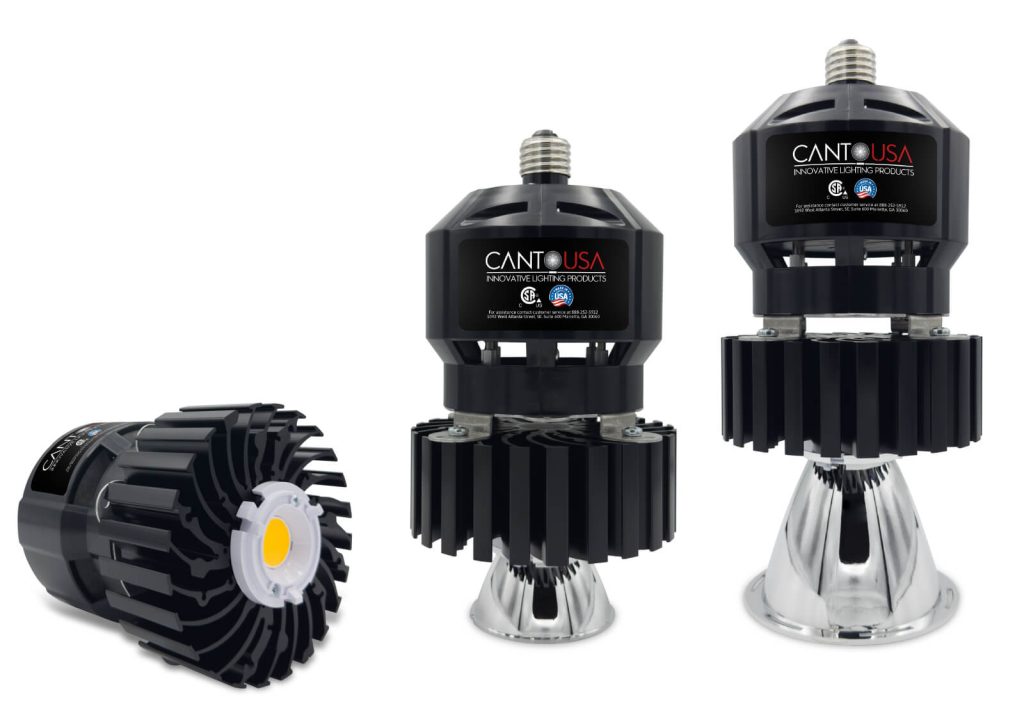
Canto USA is proud to present our RETRO series. The RETRO-Fusion® 2.0 and RETRO-Passive® 2.0 are 0-100% phase dimmable (forward and reverse) variable wattage LED 2700K-6500K 80-97 CRI engines. They are designed for older SCR, TRIAC, and IGBT dimmer systems but are compatible with newer dimmer systems. A direct replacement of existing lamps, our LED retrofit can be used in a wide range of applications or even new installations. Custom and standard mounting options are available.